


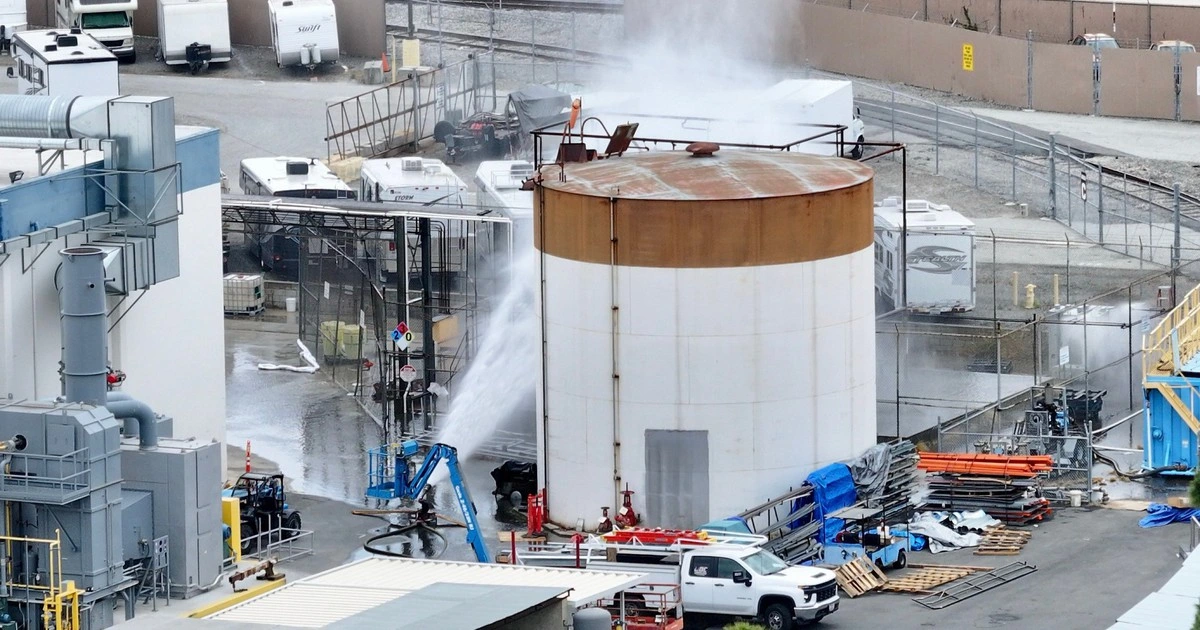
Recent incidents in the United States, such as the chemical tank leak in Orange County, California, that forced community evacuation, and the explosion at the Nippon Dynawave paper mill, have once again highlighted the critical importance of process safety in industry. These events not only caused harm to people and property damage, but also seriously affected the environment and corporate reputation. In this context, the first and most important step in process safety management is hazard identification (HAZID).
Hazard identification is the systematic process of identifying potential sources of danger in a process, equipment item, or production system. If hazards are not fully identified from the outset, subsequent control measures will be ineffective, increasing the risk of accidents. It can be said that the quality of the entire safety management system depends heavily on the completeness and accuracy of this stage.
In practice, many incidents occur not because of a lack of technology or equipment, but because of gaps in hazard identification or inadequate assessment of possible scenarios. For example, a small leak under normal conditions can become a disaster when combined with factors such as the presence of an ignition source, the potential escalation of the incident, the failure of safety-critical equipment, or, worse, human error that further aggravates the event. Therefore, a systematic and multidimensional approach to hazard identification is essential.
Currently, there are several common methods that help conduct hazard identification in a structured and effective manner: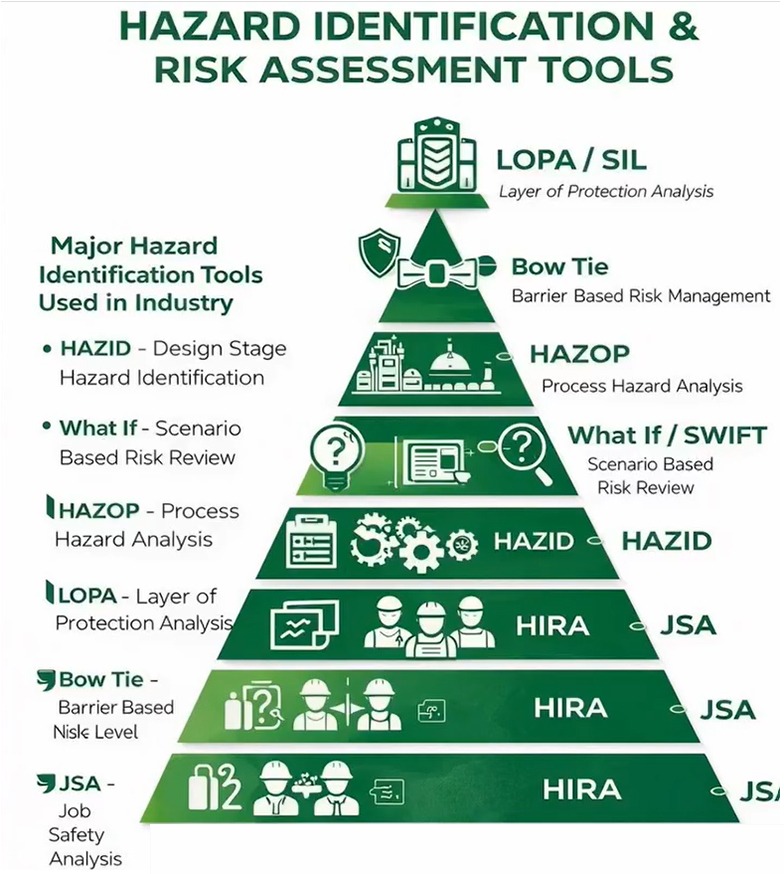
- Checklist: A simple method based on existing experience and standards, used to review common hazards. It is suitable for repetitive activities or projects at an early stage.
- HAZID (Hazard Identification): A method for identifying hazards at an overall level, commonly used during the preliminary design stage to identify key risks. This method is widely implemented with reference to ISO 17776.
- HAZOP (Hazard and Operability Study): A detailed analysis of each process section using guidewords to identify deviations and consequences. This is the most commonly used method once process and instrumentation diagrams (P&IDs) have been completed. Invented in the 1960s, HAZOP is now widely implemented with reference to IEC 61882.
- LOPA (Layer of Protection Analysis): An analysis of independent protection layers to assess the degree of risk reduction and determine the need for additional protective measures. Reference standards include IEC 61508 and IEC 61511.
- FMEA (Failure Modes and Effects Analysis): Focuses on the failure modes of equipment or systems and their consequences. The reference standard is IEC 60812.
Each method has its own strengths and is often used in combination to ensure full coverage of risk aspects. The selection of an appropriate method depends on the project phase, the complexity of the system, and the organization’s available resources.
To effectively implement these methods, in-depth training for technical and management teams is a key factor.
SEN Consulting’s PHA HAZOP Training Course is a fundamental and comprehensive starting point for participants to understand the role of, and the proper way to implement, all the above methods. The course not only provides theoretical knowledge but also equips participants with practical skills through real-life case studies, helping them apply the methods effectively in their working environment. SEN has experience in more than 200 HAZOP, HAZID, and LOPA studies for offshore and onshore industrial facilities. The extensive knowledge and practical experience of the instructors in hazard identification and risk analysis will provide participants with valuable insights for preventing process safety disasters in their organizations. (See PHA Training Course information here)
In conclusion, hazard identification is the foundation of process safety. Proper investment in hazard identification methods and workforce training not only helps reduce risks but also contributes to building a sustainable safety culture within the organization.